



More and more families are looking for educational options that allow their children to grow up in a multilingual environment. It is not just about learning a second language: the benefits of bilingualism cover areas as diverse as cognitive development, social skills, academic performance and future professional prospects.
Based on the experience of educational centres and language programmes, it is clear how bilingualism transforms the way children and adolescents learn, interact and understand the world. This article brings together, in a clear and practical way, the main cognitive benefits of bilingualism, as well as its emotional and social impact.
The cognitive benefits of bilingualism in development
Before delving into specific advantages, it is important to understand that bilingualism acts as constant training for the brain. Switching between two languages activates areas related to attention, memory and mental flexibility, which explains many of the benefits outlined below.
Greater attention span and concentration
Among the most widely studied cognitive benefits of bilingualism is the improvement in selective attention. Bilingual children must manage two linguistic systems and choose which one to use in each situation. This frequent exercise strengthens essential executive functions such as concentration, self-control and working memory.
For this reason, many experts highlight the benefits of being bilingual for the brain, especially in tasks that require filtering information and maintaining focus for longer periods.
A more flexible and creative brain
Switching between two languages trains cognitive flexibility. This ability allows individuals to change perspective, solve problems in different ways and generate original ideas. In educational settings, this trait is observed in how easily students adapt their thinking to new circumstances.
This is one of the benefits of a bilingual brain that has the greatest impact on academic performance and the ability to learn independently.
Long-term advantages for cognitive health
Continuous exposure to a dual linguistic structure encourages the creation of denser and more flexible neural connections. This contributes to greater cognitive reserve, a factor linked to the brain’s ability to compensate for ageing. Although this advantage is most noticeable in adulthood, it confirms that the benefits of bilingualism have long-lasting effects.
The benefits of bilingualism in learning and academic performance
The impact of bilingualism is not limited to the cognitive level; it also directly influences how children learn, process information and connect concepts. This influence is reflected in different academic areas, explained in the following sections.
Improved overall language competence
Learning a second language not only improves skills in that language; it also strengthens mastery of the mother tongue. Bilingual children develop greater linguistic awareness: they analyse structures, identify patterns and pay closer attention to vocabulary.
This improvement has a direct impact on their ability to read, write and communicate clearly.
Enhanced reasoning and analytical skills
Another widely recognised cognitive benefit of bilingualism is the development of logical thinking. Bilingual children often show greater agility in classifying information, deducing relationships and solving problems in a structured way.
Greater ease in learning other languages
Early exposure to two languages improves phonetic sensitivity, verbal memory and imitation skills. For this reason, many bilingual students learn a third language more quickly, as their brains are already accustomed to managing multiple linguistic systems.
The benefits of bilingualism in the emotional and social sphere
Speaking two languages not only transforms the brain; it also shapes how children relate to others, understand the world and manage their emotions. These social and emotional dimensions of bilingualism can be observed at different levels.
Increased confidence and independence
Interacting in another language boosts self-confidence. Children realise that they can communicate, take part in activities and relate to people from different backgrounds. This experience strengthens their independence and builds self-esteem.
Development of empathy and a global mindset
Bilingualism exposes young people to diverse cultural realities. This helps them better understand different points of view, respect differences and develop empathy. In a globalised world, these skills are essential.
Improved communication skills
Bilingual children learn to adapt the way they communicate according to the language, context and interlocutor. This skill translates into greater clarity, better negotiation skills and more effective communication.
The benefits of a bilingual brain in later life
The effects of bilingualism do not disappear after childhood. On the contrary, they accompany individuals throughout their lives and provide significant advantages in the professional sphere and in adapting to dynamic environments.
Professional competitiveness
In an increasingly international environment, mastering two languages opens academic and professional doors. Children who grow up with this advantage have more opportunities to access international programmes, scholarships, stays abroad and jobs in global sectors.
Adaptability in complex environments
Managing two languages fosters mental flexibility, a particularly valuable skill in professions that require creativity, problem-solving and critical thinking. This ability is one of the most relevant long-term benefits of being bilingual for the brain.
How to promote bilingualism from early childhood
For bilingualism to develop naturally and effectively, the environment plays a key role. Certain practices and experiences can accelerate this process and maximise its effects, as outlined below.
Creating natural exposure environments
Linguistic immersion, both at home and in educational programmes, allows the language to become a real and everyday tool. This continuous exposure is key to enhancing the benefits of bilingualism.
Choosing activities that encourage spontaneous language use
Group dynamics, sports activities, theatre, music and collaborative games encourage natural and spontaneous use of the language, far removed from the pressure of the traditional classroom. In these contexts, children and adolescents are motivated to communicate in order to participate, coordinate or solve small tasks, which encourages them to use English without fear of making mistakes. This type of real interaction activates deeper cognitive processes: it improves working memory, speeds up language switching and strengthens attention span.
Maintaining long-term motivation
Language learning is closely linked to emotion and enjoyment. When children associate English (or another language) with positive experiences, progress becomes more consistent and meaningful.
Promoting bilingualism through real-life experiences
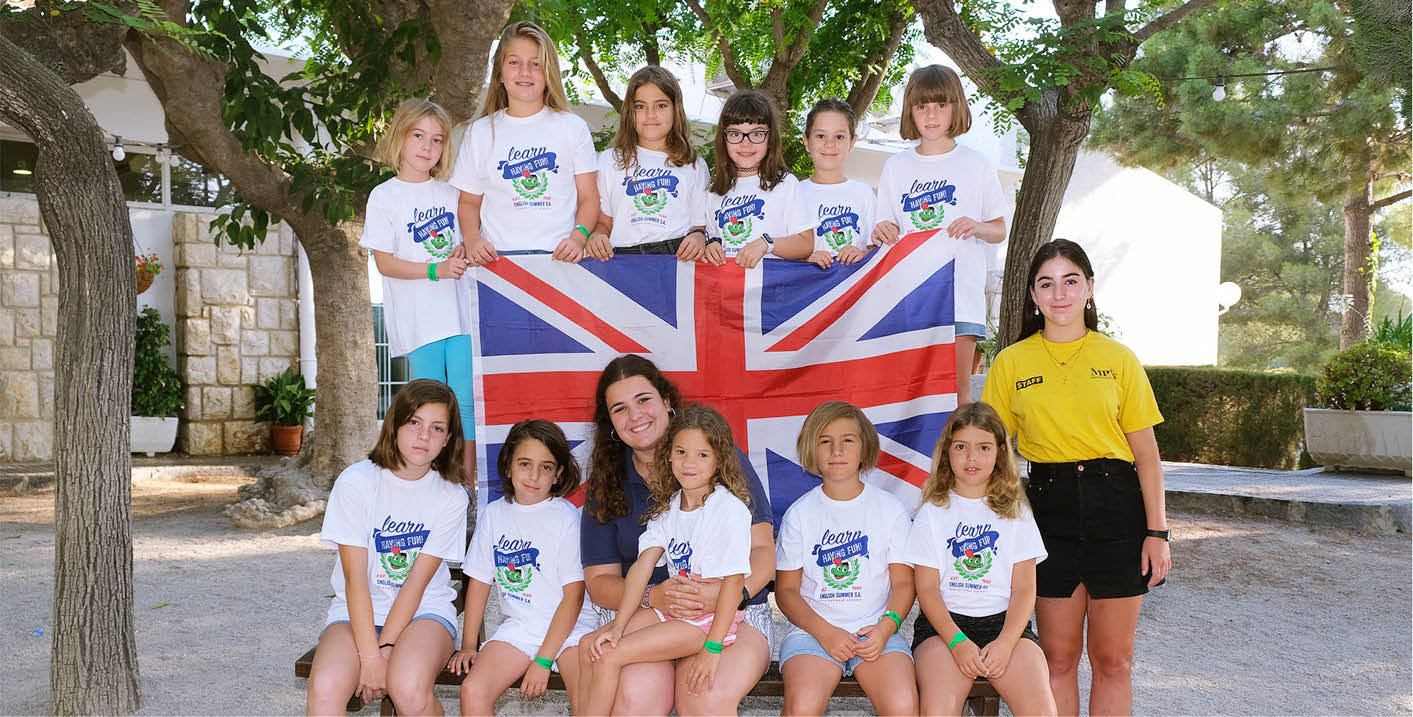
The benefits of bilingualism are consolidated when children experience the language in real, dynamic and motivating contexts. At English Summer, learning is not limited to the classroom: it is integrated into games, activities and daily life. During English Summer camps, both for children and for those seeking more advanced challenges in English Summer camps for teenagers, participants practise the language while enjoying sports, workshops, excursions and group activities designed to learn naturally, enjoyably and without pressure.
Learning English can also continue beyond the summer. Maintaining contact with the language by learning English through play, songs, stories or watching English-language films for children helps consolidate what has been learned and allows them to continue enjoying the benefits of a bilingual brain throughout the year.